Ownership
how assets and entities are held
Examine the connection
What does the family want ownership to achieve, and how does that connect to decision rights and succession roles?
 Family Continuity Architecture
Family Continuity Architecture
I help business families connect ownership, decision authority, usable liquidity and succession, working with their existing advisers.
The preliminary conversation is complimentary. Broad circumstances are enough; no sensitive documents are required.
Personally led. Professionally coordinated. Bengaluru, India

Personally led by Sandeep N. Setty
Family Continuity Architect
Examine the professional record →
Your starting point
The Family Continuity Diagnostic
A written view of the connected position, before the family selects documents, structures or funding.
Fictional working example
Resources
Funds exist in the company’s account.
Unconfirmed authority
Alternative banking authority has not been confirmed.
Named next action
The bank and appointed counsel confirm requirements.
Fee-based and agreed in writing. Findings can be used with existing advisers; later work is separately agreed. Product-related remuneration may include provider commissions. Fees and remuneration →
A connected review
Illustrative working view
Continuity Exposure Map
Six dimensions assessed as one connected system.
Working viewhow assets and entities are held
What does the family want ownership to achieve, and how does that connect to decision rights and succession roles?
who can decide and act
Who has the information, consent and authority to act, and can that person access the capital and execution support required?
what capital is usable
Is capital accessible when required, and available to the person responsible for the decision?
how roles and responsibility pass
Do ownership, responsibility and capability align with the authority and records needed for a handover?
whether decisions and records align
Do family intentions and formal records agree with who is authorised to act and what has been completed?
what is pending and who acts
Which decisions, professional confirmations and funding arrangements must be completed before the next action?
The review also examines what ownership should make possible: family income, enterprise resilience, next-generation responsibility and room for different paths. Explore the ownership questions →
Recognise the decision
Explore fictional educational examples, not client engagements. All matter patterns →
Selected professional record
These records provide professional context, not evidence of client outcomes. The designation is not a regulatory licence.
Examine the professional record →A personal introduction
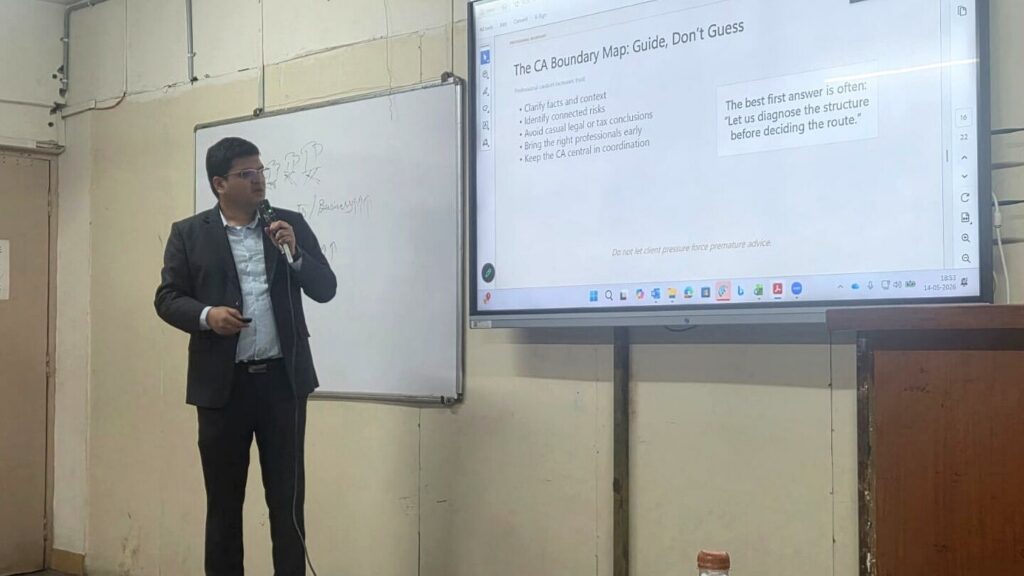
Sandeep explains how diagnosis connects family decisions to completed action, alongside existing advisers.
Read the working approach →English transcript, edited for clarity to match the revised captions.
I am Sandeep N. Setty, a family continuity architect. I help business families answer one critical question: will the family's arrangements continue to work when the founder is no longer at the centre of every important decision?
Many established business families have chartered accountants, lawyers, bankers, wills, nominations and succession discussions. Yet important gaps may remain. Will the family know what exists, whom to contact, what liquidity is immediately accessible?
And when members of the next generation carry different responsibilities, should equal economic participation automatically require equal control?
My background in financial leadership and intergenerational planning helps me see how family intentions, business ownership, financial obligations and existing arrangements affect one another.
I begin with diagnosis, not with a product or predetermined structure. I clarify the continuity brief, identify unresolved decisions, and coordinate implementation with professionals.
These conversations are often sensitive, so the work is handled privately, carefully, and with respect for existing relationships.
Continuity does not come from adding more documents. It comes from ensuring that the family's decisions, structures, liquidity, documents, and professional actions are aligned and actually completed.
Clear responsibilities
Sandeep integrates. Appointed professionals advise and execute within their disciplines. Each further phase is separately scoped.
Family Continuity Architecture operates through Continuity Charter Partners LLP.
A clear, separable capital or dependable-income obligation may suit a focused Continuity Capital Review.
A private starting point
Share the broad situation and why it matters now. The complimentary conversation establishes whether a Diagnostic, a focused Review or no immediate engagement is appropriate.
No sensitive documents are required initially. Scope, fee, participation, timing and information-sharing terms are agreed before a structured mandate begins.